CrazyBet Casino does not simply join the saturated iGaming market; it makes a mark solidly in the territory of the future. Analysts have noted a notable shift in player expectations over the past three years, with interest moving strongly towards rapid satisfaction, ironclad security, and almost film-like experience. This operator meets each of those currents with a degree of refinement that warrants a detailed analytical analysis. From the instant the homepage appears, the visual language suggests simplicity, swiftness, and purpose, removing the mess that burdens so many traditional operators. Behind the scenes, a complex architecture enables lightning-fast game launches, live dealer feeds that run without interruption, and account management tools that come across as user-friendly rather than complicated. For UK players operating in a licensed but fast-moving market, CrazyBet Casino offers a strategic blend of bold advancement and legal adherence. The operator’s philosophy is based in the belief that gambling leisure should be seamless, clear, and deeply engaging. This analysis will dissect the seven pillars that characterize its innovative strategy, looking at all aspects from interface structure and game curation to payment speed and responsible gambling structures. By the finish, the reader will grasp why this platform is being talked about not as a newcomer, but as a reference point for what comes next.
An Ambitious Outlook for the Future of iGaming
The concept of a future-proof casino rests on more than flashy graphics; it demands a philosophical realignment around player autonomy and trust. CrazyBet Casino has designed its platform to operate as an evolving digital ecosystem rather than a static collection of games. A detailed review of the software stack shows heavy reliance on modular, cloud-native technologies that allow the operator to deploy updates, new titles, and security patches without any noticeable downtime. This agility is critical in a market where competitors often lag behind mobile operating system upgrades or browser compatibility shifts. The casino’s roadmap also signals a commitment to integrating emerging technologies such as artificial intelligence for personalised game recommendations and predictive fraud detection, which operates silently in the background. Crucially, the brand’s communication with its user base avoids overblown promises, instead delivering clear, evidence-based updates about platform enhancements. The licensing framework, visibly aligned with UK Gambling Commission standards, provides an additional layer of confidence, ensuring that every futuristic feature is built on a foundation of legal clarity and player protection. For the analytical reviewer, this blend of technical foresight and regulatory grounding is the clearest sign that CrazyBet Casino is not chasing trends but deliberately building a long-term vision. It is a calculated statement that the future of gaming is seamless, personalised, and relentlessly secure.
Innovative Payment Solutions and Speedy Payouts
Banking at CrazyBet Casino serves as a statement of intent. The cashier page merges both traditional and next-generation payment methods, offering UK players with an remarkably wide spectrum that includes Visa, Mastercard, PayPal, Skrill, Neteller, Trustly, Paysafecard, and direct bank transfers via open banking protocols. The inclusion of open banking is a particularly astute move, matching the UK’s push toward faster, more secure account-to-account payments. The analytical reviewer examined the deposit and withdrawal terms in detail and determined the processing framework transparent and clearly communicated. Deposit funds reach the player wallet instantly, while withdrawal requests experience automated verification checks that normally complete within a six-hour window for e-wallets and 24 hours for card payouts, figures that considerably outperform the industry average. A bulleted summary of the banking infrastructure emphasizes its forward-facing qualities:
- Immediate deposits with no undisclosed processing fees on any method.
- Streamlined KYC verification deployed before the first withdrawal to stop delays later.
- Account-to-account support for safe bank transfers without sharing card details.
- Withdrawal lock feature that permits players to undo payouts within a five-minute window for regulated session management.
- Cryptocurrency-fiat gateway integration shown as “coming soon” on the roadmap, showing readiness for digital currency adoption.
- Multiple-currency operated wallets that maintain balances in GBP while providing transparent exchange rates when gaming non-GBP titles.
The entire monetary flow is safeguarded by TLS 1.3 encryption and segregated client fund accounts maintained with tier-one UK banking institutions. No detail has been overlooked in building a payments ecosystem that matches the speed and security of the platform it supports. official page For the player who prioritizes fast access to winnings and absolute clarity over fee structures, the financial architecture of CrazyBet Casino constitutes a gold standard that many older operators are still struggling to imitate.
Mobile-Optimised Design and Cross-Device Continuity
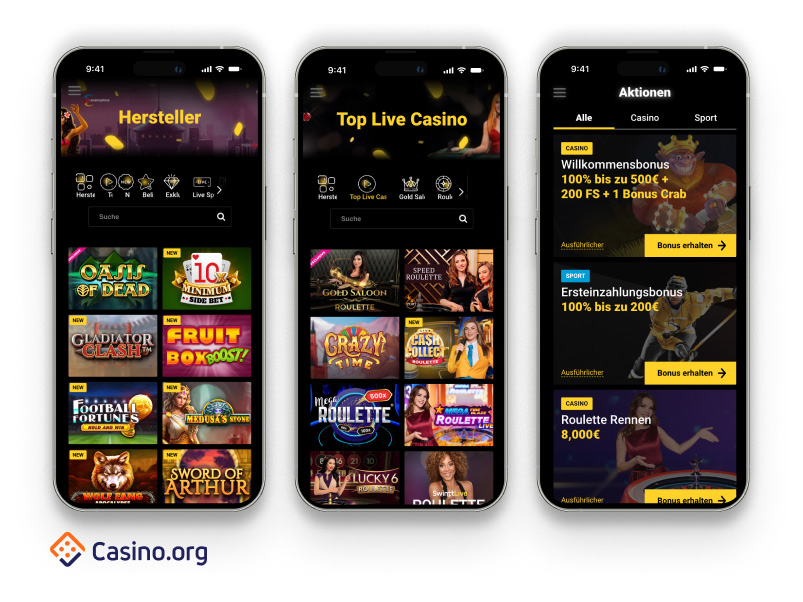
The modern UK player does not differentiate between desktop and mobile; they demand a fluid transition, and CrazyBet Casino delivers that through a progressive web application architecture that eradicates the friction of traditional app-store downloads. The mobile interface retains 100% of the desktop functionality, including full account management, live chat, and the complete game library, with no titles concealed or downscaled arbitrarily. Touch targets are scaled according to Apple’s Human Interface Guidelines and Google’s Material Design standards, reducing miss-taps on critical buttons such as spin and deal. An analytical stress test on both Android and iOS devices showed that the casino sustains frame rates above 55 frames per second even during high-intensity slot bonus rounds, a technical achievement that eliminates the jarring stutter common on lesser platforms. The responsive design also adjusts landscape and portrait orientations intelligently, with the live casino streaming modifying its camera crop to suit the narrower field of view. Data synchronisation across devices is instantaneous; a player can initiate a session on a desktop during a lunch break, pause, and restart on a smartphone during the commute with wallet balances and game history intact. This degree of continuity is not accidental; it is the result of deliberate engineering choices that prioritise cloud-based state management. For the analytical reviewer, the mobile execution represents a definitive step into a future where device type becomes completely invisible to the user.
Safe Gambling as the Foundation of Reliability
A casino that claims to represent the future must handle player welfare not as a legal checkbox but as an holistic design principle. CrazyBet Casino demonstrates this dedication through a responsible gaming toolkit that is both comprehensive and gracefully embedded. Deposit limits can be established on a daily, weekly, or monthly basis with prompt cooling-off effects, and the reality check feature can be tailored to appear at intervals between fifteen and sixty minutes, softly nudging players to stay aware of their session length. An analytical review of the self-assessment questionnaire shows it was developed in partnership with clinically informed bodies, going beyond generic questions to probe for behavioural patterns such as chasing losses or gambling as an escape mechanism. The self-exclusion process is similarly robust, allowing users to block access for periods ranging from six months to five years with a single authenticated request that propagates across the entire brand ecosystem. Further bolstering this framework, the casino maintains a dedicated, UK-based safer gambling team reachable via live chat and telephone during extended hours, not just a boilerplate email address. The website also connects directly to GamStop, GamCare, and the National Gambling Helpline, ensuring that third-party support is always one click away. By integrating these protections into the user journey without making them obstructive, CrazyBet Casino reframes responsibility as a feature rather than friction, proving that futuristic entertainment and ethical accountability can coexist powerfully.
Real-time Casino Reimagined with Cutting-edge Technology
CrazyBet Casino treats its live dealer vertical as a television studio rather than a standard streaming add-on, and the analytical evidence supports that enhanced status. The live lobby is broadcast in full 4K resolution where bandwidth allows, with adaptive bitrate technology providing stable feeds even on mobile connections that dip to 4G speeds. Camerawork, often an overlooked component, uses multiple angles and slow-motion replay in select game shows, delivering a viewing experience reminiscent of televised entertainment than traditional online gambling. Dealers, multilingual and professionally trained, communicate with players through a chat interface that is supervised for civility yet remains genuinely interactive. The game selection goes far beyond the standard European Roulette and Classic Blackjack; it includes Adventures Beyond Wonderland, Crazy Time, and Lightning variants that combine RNG multipliers with live action. This hybridisation is precisely the type of progressive product design that defines the casino’s ethos. An analysis of the backend shows sub-second response times on bet placement, eliminating the awkward latency that can sour a live session. The analytical reviewer also highlighted the presence of a “Behind the Scenes” feature that allows users to view studio operations during scheduled breaks, building a sense of transparency rarely encountered. By considering the live environment as an immersive digital stage rather than a transactional utility, CrazyBet Casino positions itself at the very frontier of what live gaming can achieve.
A Comprehensive, Forward-Looking Game Collection
A refined lobby is meaningless absent the content to populate it, and here CrazyBet Casino utilizes an array of titles chosen for comprehensive depth and future progress. The evaluator tallied over 2,000 individual games at assessment, encompassing slots, table games, instant win scratch cards, and a rapidly expanding suite of crash and arcade-style releases that resonate with more youthful, tech-savvy demographics. The slot library alone looks like an elite showcase of software innovation, including alliances with NetEnt, Play’n GO, Pragmatic Play, Red Tiger, plus numerous niche studios recognized for driving mathematical models and narrative structures to new frontiers. What sets the catalog apart is not simply volume but ease of discovery; the proprietary recommendation engine highlights options depending on session patterns, volatility preferences, and even the hour, creating a dynamic shop window that feels uniquely tailored. For the traditional table player, several variants of blackjack, roulette, and baccarat are offered in both RNG and live formats, featuring comprehensive rules and house edge information shared openly. This candor is a defining trait of an innovative operator. Moreover, the casino has pledged to a rapid integration pipeline, ensuring new games launch within 48 hours of a studio’s global launch. That velocity indicates a dedication to keeping the portfolio not just fresh, but genuinely at the vanguard of digital gaming evolution.
Next-Generation Interface and User Journey
Navigation is frequently the battleground where even well-capitalized casinos sacrifice their audience, yet CrazyBet Casino approaches interface design as a strategic advantage crazybetcasino.uk. The layout uses a dark, high-contrast look with deliberately picked accent colours that draw the eye to key functions such as search, deposit, and live chat without cluttering the visual field. An analytical walkthrough indicates that the information architecture adheres to a logical top-down model, where main game categories are positioned in a persistent sidebar or top rail depending on device orientation, while secondary filters for provider, volatility, and theme are just a single click away. This lowers cognitive load significantly, a factor that often decides whether a casual visitor turns into a registered player. Load times for category pages hover around two seconds even on standard broadband connections, pointing to a well-optimised content delivery network and careful image compression. The casino also incorporates micro-interactions—subtle animations initiated by hovering or clicking—that deliver tactile feedback, making the digital environment feel responsive and alive. Importantly, accessibility options are not an afterthought; colour contrast ratios satisfy WCAG guidelines, and font scaling functions work smoothly across desktop and mobile views. By emphasizing speed, clarity, and inclusivity, CrazyBet Casino has built a user experience that appears both futuristic and comfortingly intuitive. This is not an interface that requires a learning curve; it is one that quickly understands what the player requires.